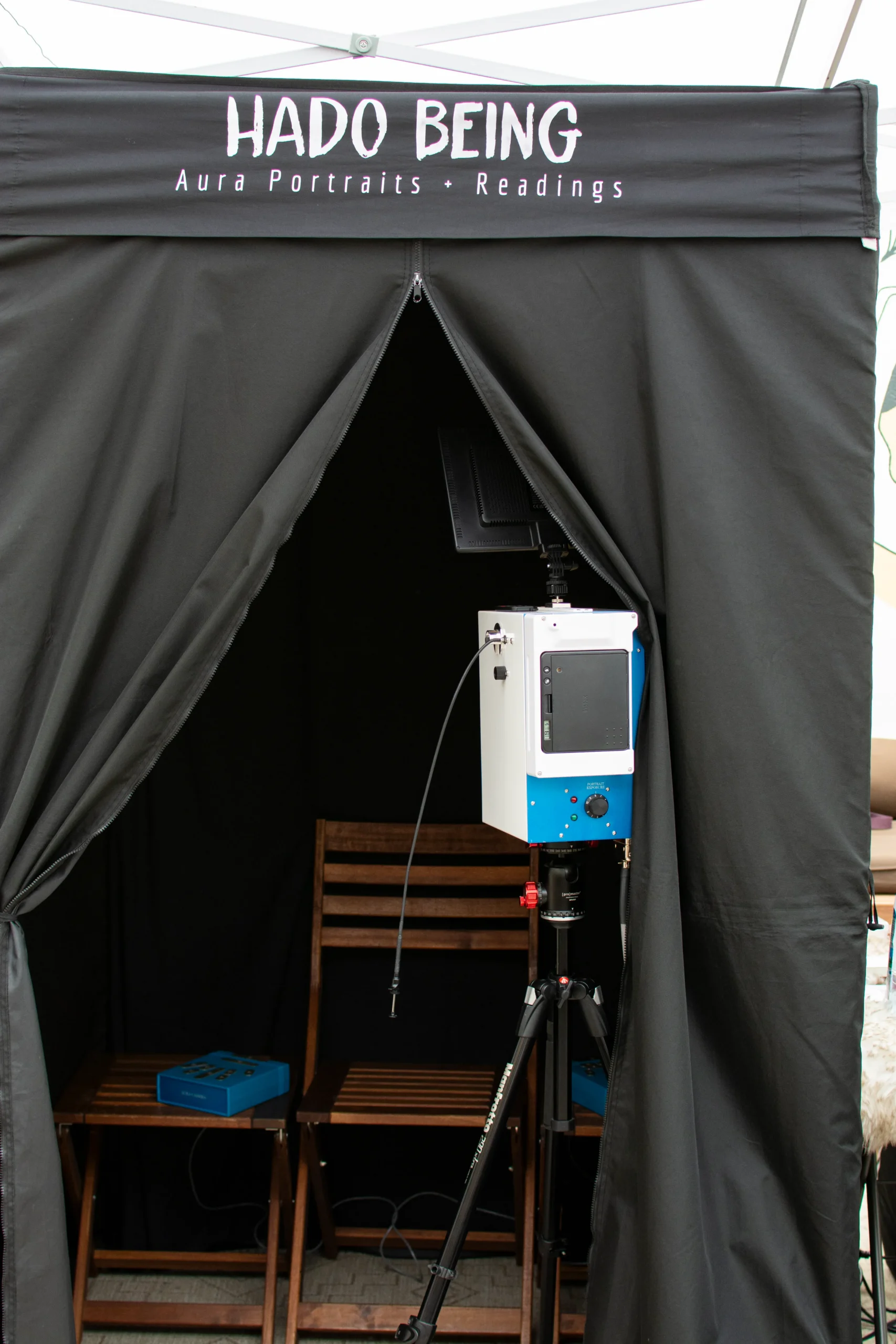
If you’ve ever seen one of those colorful portraits with clouds of vibrant color surrounding a person, you’ve probably wondered:
Is that really my aura? Is it a filter? Is it Photoshop? Are you choosing my colors?
Not exactly.
Aura photography is a blend of traditional portrait photography, biofeedback technology, and color interpretation. The result is a visual snapshot that many people use as a tool for self-reflection, conversation, and curiosity.
Whether you’re completely skeptical, deeply spiritual, or somewhere in the middle, here’s what you should know.
So, What Is Aura Photography?
Aura photography creates a portrait surrounded by colors that are generated from information collected by hand sensors during the photo session.
Most modern aura cameras use biofeedback sensors that measure subtle physiological signals such as skin conductivity, temperature, and galvanic skin response. That information is translated into colors by the camera’s internal system and overlaid onto your portrait.
In simple terms:
You sit for a portrait.
The sensors gather information.
The camera translates that information into color.
A photo develops in front of your eyes.
It’s part technology, part interpretation, and entirely fascinating.
The important thing to understand is that modern aura cameras are not photographing a visible rainbow floating around your body. They’re creating a visual representation based on real biofeedback data collected during the session.
And that’s part of what makes it interesting.
How Does an Aura Camera Work?
The process is surprisingly simple.
Step 1: You Place Your Hands on the Sensors
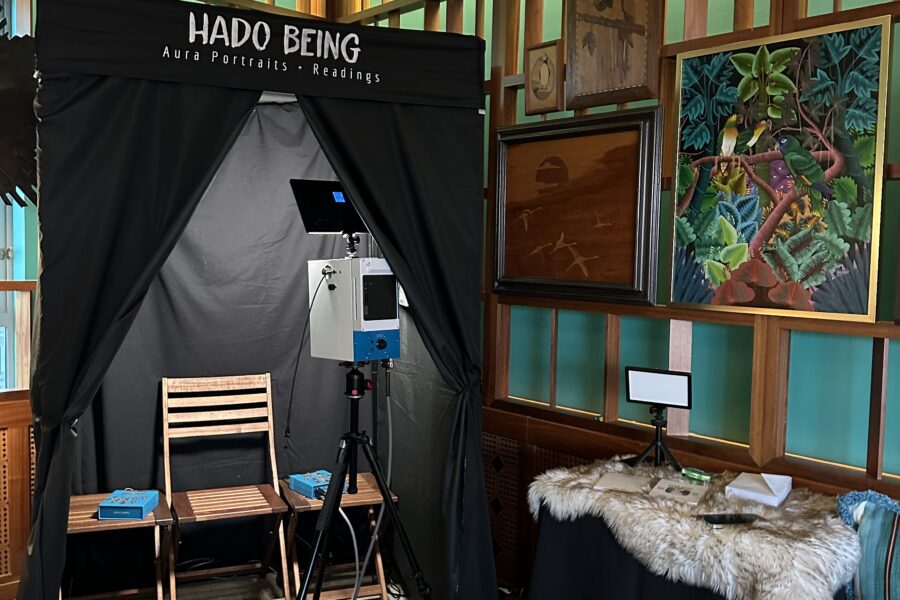
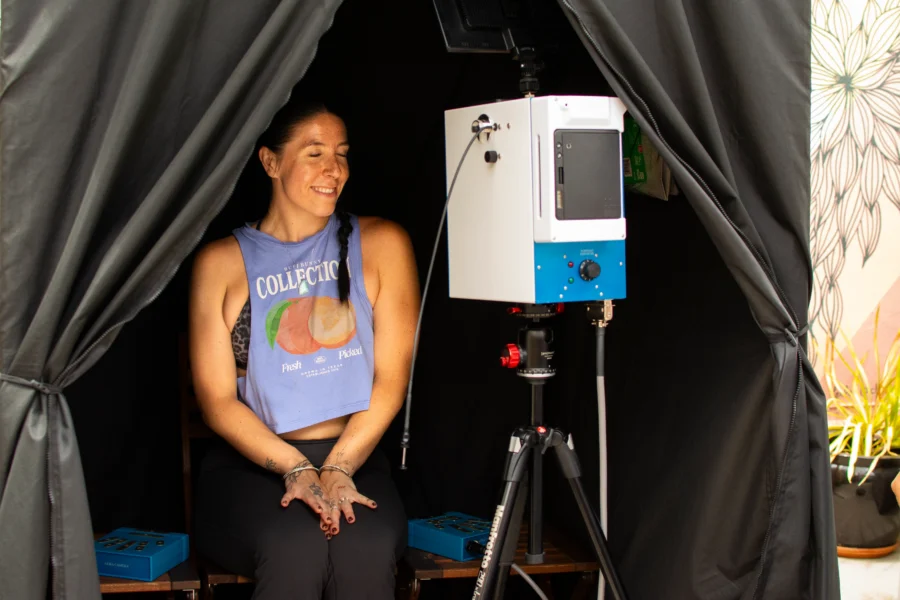
Our AuraCam uses sterling-silver hand plates connected to a specialized camera system. As you place your hands on the sensors, they collect biofeedback information from your body.
Step 2: A Portrait Is Taken
The camera captures your photograph, similar to a traditional instant photo. Using a double-exposure process that combines your portrait with the aura imagery generated by the camera.
Step 3: The Camera Generates Colors
The camera converts the sensor readings into colors using a built-in color mapping system. Different patterns and measurements correspond to different colors that appear around your portrait.
Step 4: Your Aura Portrait Develops
Within a few minutes, you have a one-of-a-kind portrait that represents your energy in that moment.
Not last week.
Not next month.
Right now.
That’s one of the reasons people return for multiple sessions over time. The photo becomes a snapshot of a specific chapter in their life.
Wait… Is Aura Photography Scientifically Proven?
This is probably the most common question we hear.
The short answer is:
The sensors are measuring real data. The interpretation is where belief, symbolism, and personal meaning come into play.
The AuraCam collects measurable physiological information such as skin conductivity, vibration and temperature changes. Those readings are real. The colors are generated by software using a predetermined system that assigns colors to those measurements.
There is currently no scientific evidence proving that aura photography captures a literal, visible energy field surrounding the body.
For us, that’s not really the point.
Most people don’t walk away saying, “Now I have proof.”
They walk away saying:
“That actually resonates.”
Or:
“That’s exactly what I’ve been going through.”
Or sometimes:
“That color surprised me.”
Aura photography works best when it’s approached as a tool for self-reflection rather than a medical test or scientific diagnosis.
What Do the Colors Mean?
This is where things get fun.
Many aura systems associate colors with certain emotional, mental, or energetic qualities. A photo might feature blues, greens, purples, yellows, reds, or combinations of many colors.
But here’s something people often miss:
The meaning isn’t just about the color itself.
Placement matters.
Intensity matters.
Patterns matter.
The combination of colors matters.
Two people can have a dominant blue aura and receive completely different interpretations because the overall image tells a different story.
That’s why an experienced aura photographer isn’t simply reading from a color chart.
They’re helping you explore the bigger picture.
Why Do People Get Aura Photos?
Some people come because they’re curious.
Some people come because they love the art.
Some people are going through a major life transition.
Others just want a unique experience with friends.
After photographing thousands of people, we’ve noticed something interesting:
The photo is rarely what people remember most.
It’s the conversation that happens afterward.
The moment they pause.
The thing they’ve been feeling but haven’t quite put into words.
The unexpected insight.
The permission to reflect on themselves for a few minutes.
The portrait simply gives that conversation a place to begin.
The Bottom Line
Aura photography doesn’t require you to believe anything.
You don’t have to believe in chakras.
You don’t have to believe in energy fields.
You don’t even have to know what an aura is.
You just have to be willing to be curious.
At its best, aura photography is a mirror.
Not one that shows your hair or your outfit.
One that invites you to look at yourself from a different angle.
And sometimes that’s where the interesting stuff starts.