Aura photography might look like a very modern phenomenon—especially now that colorful aura portraits are all over Instagram—but the idea behind it is actually much older than the camera we use today.
People have been fascinated by the possibility of seeing an invisible energy surrounding the human body for centuries. The technology has changed dramatically over time, but the basic curiosity has stayed remarkably consistent:
Can we make the invisible visible?
Before There Was an Aura Camera
Long before anyone was taking colorful instant portraits, people were experimenting with ways to see or document what they believed to be the human aura.
In the late 19th and early 20th centuries, researchers and inventors explored everything from photography and electrical discharge to colored filters in an attempt to capture or perceive subtle energy fields.
One of the more interesting examples came from British physician Walter Kilner. In 1911, he published The Human Atmosphere, describing experiments using specially treated glass screens that he believed allowed observers to see an aura surrounding the human body.
It sounds pretty far removed from the aura portraits we know today.
But the question was already there.
What if something we can’t normally see could somehow be made visible?
Enter Kirlian Photography
In 1939, Russian electrical engineer Semyon Kirlian and his wife, biologist Valentina Kirlian, discovered a photographic technique that became known as Kirlian photography.
Their process used a high-voltage electrical field to create glowing patterns around objects placed on photographic material. The resulting images could be incredibly beautiful and were sometimes interpreted as photographs of an energetic field or “aura.”
Kirlian photography became particularly well known in the West after the publication of Psychic Discoveries Behind the Iron Curtain in 1970, which helped introduce the technique to a much larger audience.
There’s an important distinction here, though.
Kirlian photography and modern aura photography are not the same thing.
Kirlian photography records electrical corona discharges. Modern aura cameras use hand sensors and a specialized imaging system to translate sensor readings into colored imagery around a portrait.
They’re part of the same fascinating history, but they’re different technologies.
The Aura Camera Arrives
This is where the story starts to look a lot more familiar.
In the 1970s, California entrepreneur and electrical engineer Guy Coggins began developing the technology that would eventually become the AuraCamera.
His early work adapted ideas from earlier energy-imaging experiments into a system that combined hand sensors with an instant-film camera. The AuraCamera 3000 came to market in the early 1980s, followed later by the AuraCamera 6000.
And suddenly, you didn’t need a laboratory or a complicated photographic setup.
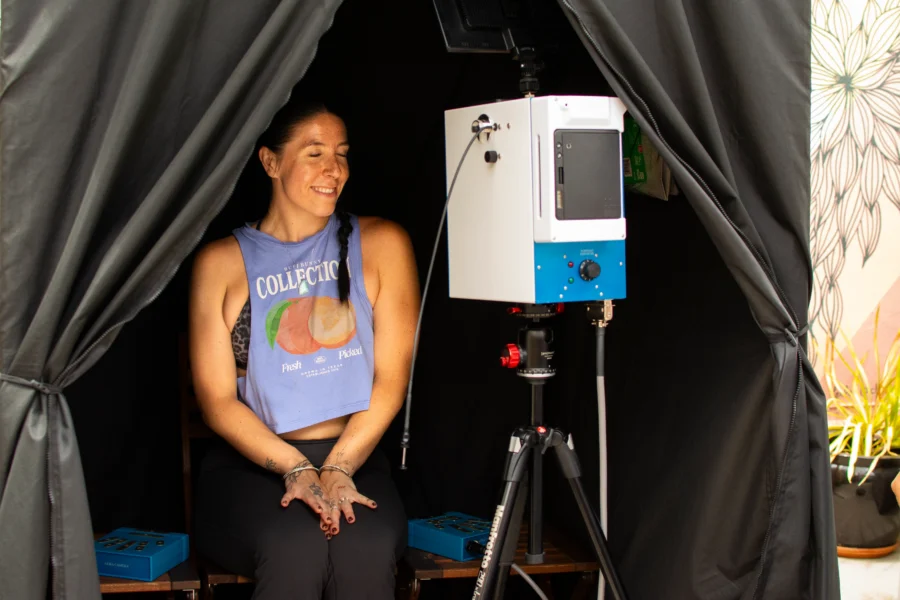
You could sit in a chair, place your hands on two sensors, have your picture taken, and walk away with a colorful portrait.
That changed everything.
From Alternative Spaces to Instagram
For decades, aura photography lived primarily in the world of metaphysical shops, wellness spaces, festivals, psychic fairs, and alternative communities.
Then something interesting happened.
People started taking really beautiful aura portraits.
And social media happened.
The aesthetic appeal of aura photography made it incredibly shareable, while the experience itself gave people something more interesting than another standard event photo. Aura photography began showing up at wellness events, retreats, creative gatherings, brand activations, parties, and pop-ups.
What was once considered a niche alternative experience started becoming something much broader.
You didn’t have to identify as “spiritual” to be curious about your aura.
You could simply think:
“That looks really cool. I want to see mine.”
And honestly, that’s still how a lot of people find us.
Where We Fit Into the Story
This history is part of why we’re so fascinated by aura photography.
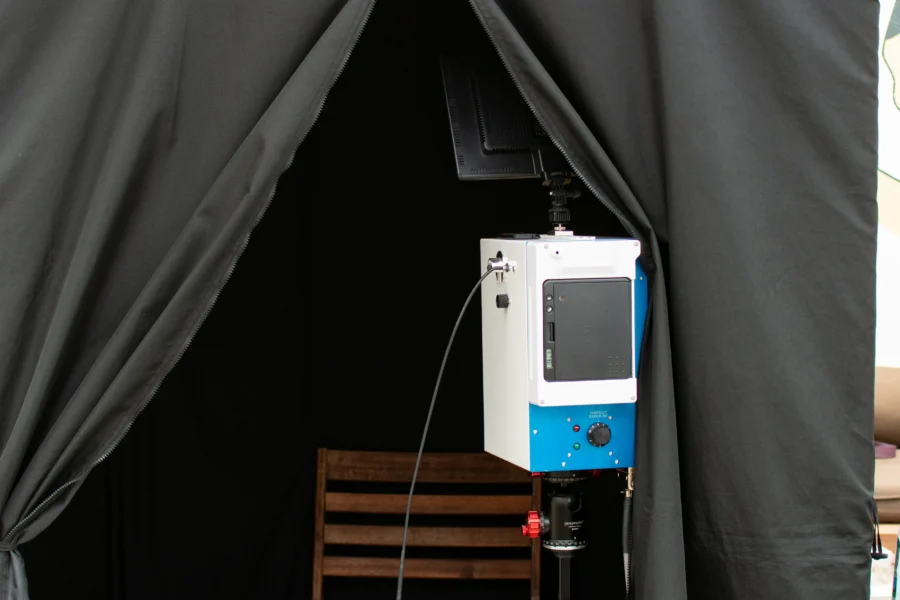
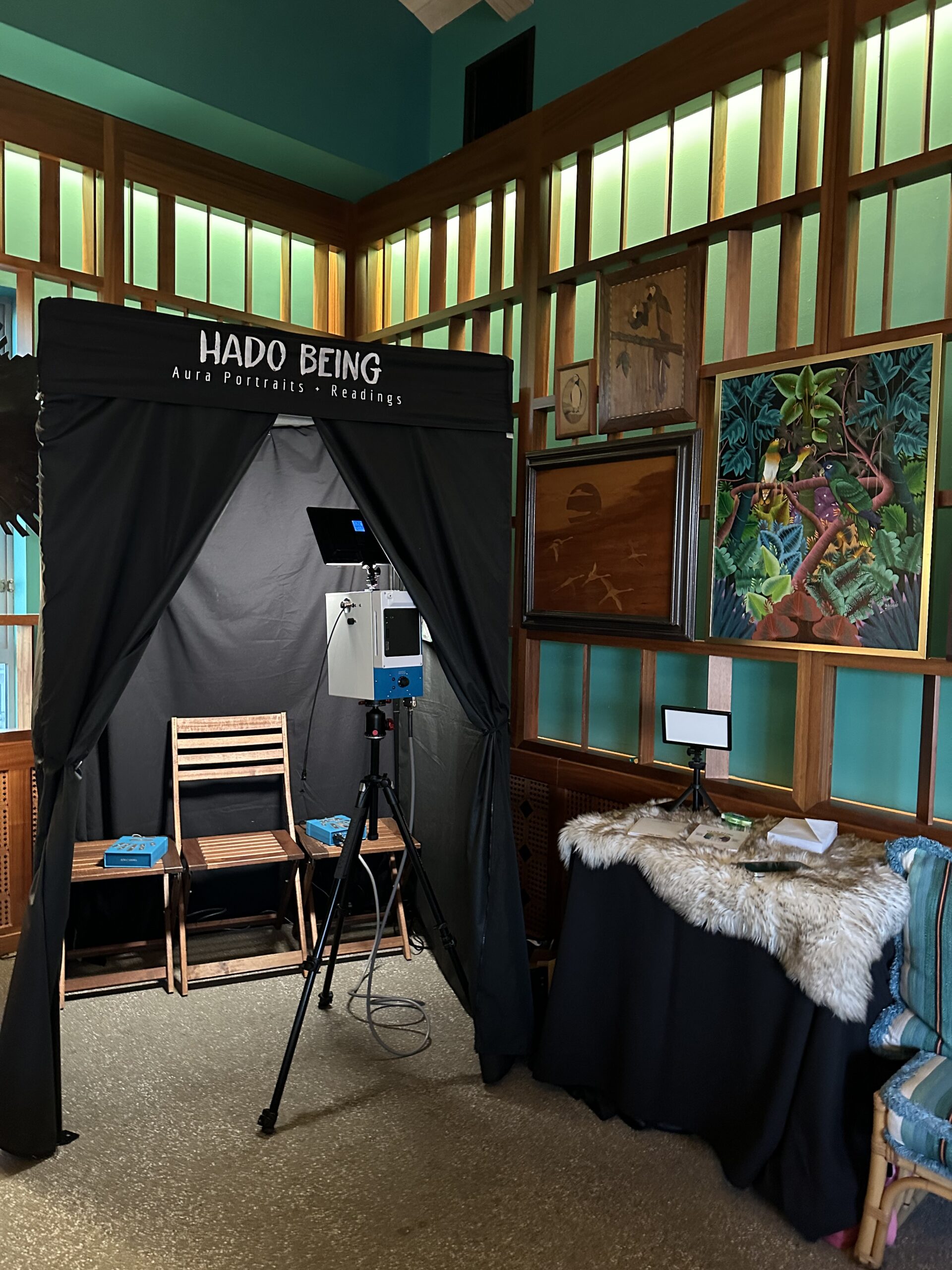
Hado Being uses an AuraCam 6000, a modern version of the technology developed from Guy Coggins’ early aura camera work. The system uses two hand sensors to collect signals, which are processed through its proprietary system and rendered as colorful imagery over your portrait on instant film.
But while the technology has evolved, the experience is still surprisingly simple.
Sit down.
Place your hands on the sensors.
Take a photo.
Wait for the reveal.
Then see what comes up.
So, Is This Science or Something Else?
This is where it’s important to be clear.
The history of aura photography includes legitimate developments in photography, electrical engineering, biofeedback, and imaging—but that doesn’t mean science has proven that aura cameras photograph a literal human energy field.
Modern AuraCamera materials describe the experience as a creative tool for self-reflection and personal exploration rather than a medical or scientific diagnostic.
And that’s actually how we prefer to approach it.
You don’t have to decide whether your portrait is “scientifically your aura” before you can get something meaningful from the experience.
You can simply be curious about what you see.
The Part That Hasn’t Changed
Technology has changed a lot since the first experiments with aura imaging.
We’ve gone from colored glass screens to electrical photography to instant-film cameras with hand sensors.
But the human curiosity underneath it all is basically the same.
We want to see ourselves.
Not just how we look.
How we’re feeling.
What we’re experiencing.
Where we are in our lives.
And maybe, for a few minutes, we want to look at ourselves from a completely different perspective.
That’s what makes the history of aura photography so interesting to us.
The technology may be unusual.
The curiosity behind it is completely human.