If you’ve never had an aura portrait taken before, you probably have questions.
Do I need to prepare?
Should I meditate first?
What if I’m in a bad mood?
What if my energy is weird that day?
And perhaps the most common question:
What actually happens during an aura photography session?
The good news is that it’s much simpler than most people expect.
No special preparation required.
No spiritual expertise needed.
No aura-photography entrance exam.
Here’s what you can expect.
First, You Don’t Need to “Do It Right”
This is something I tell people all the time.
You do not need to arrive perfectly calm, enlightened, grounded, healed, or radiating positive vibes.
You just need to show up.
Some people come in feeling amazing.
Others are stressed from traffic.
Some are celebrating a major life milestone.
Others are navigating a difficult season.
Every version of you is welcome.
Your portrait isn’t a test.
It’s simply a snapshot of a moment in time.
You’ll Sit Down and Place Your Hands on the Sensors
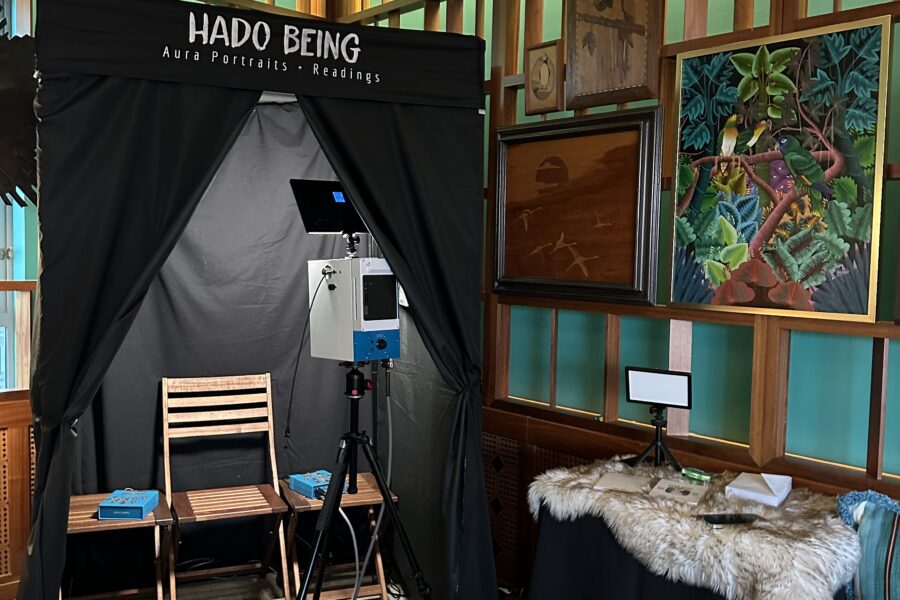
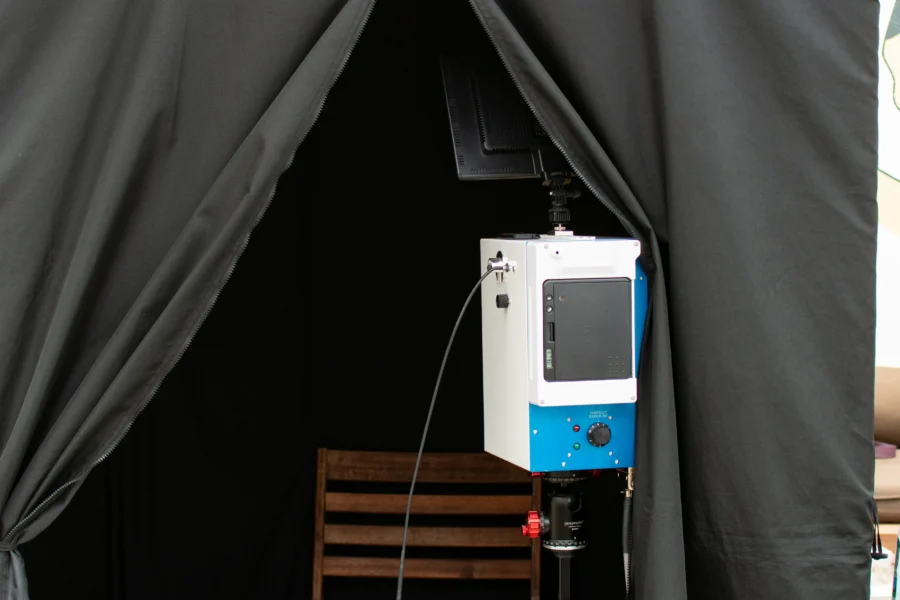
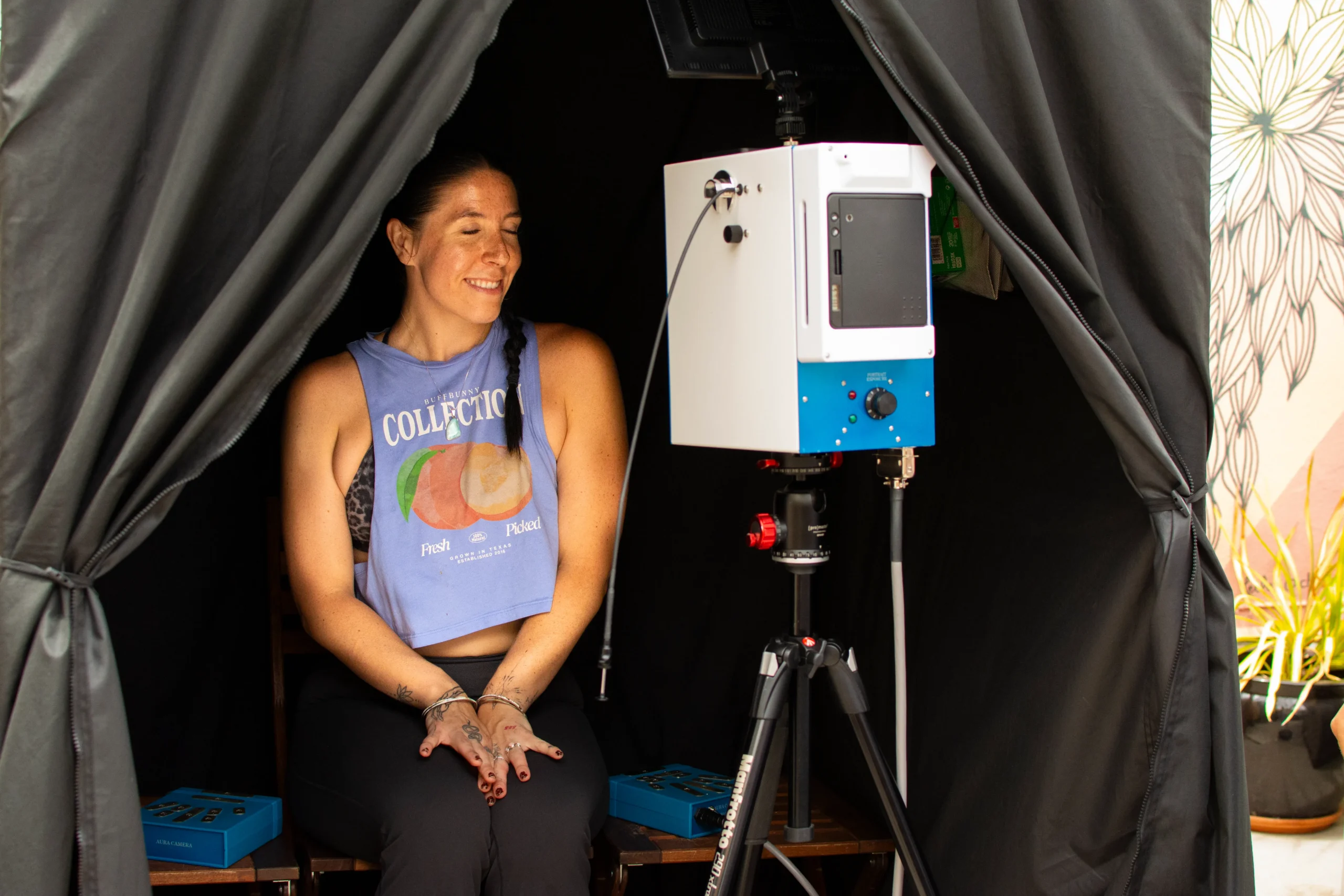
The session itself begins by placing your hands on the hand sensors connected to the camera system.
The sensors gather biofeedback information while you sit comfortably for your portrait.
Most people are surprised by how relaxed the experience feels.
There’s no complicated process.
No awkward posing.
No pressure to perform.
Just a few moments to settle in and be present.
Then We Take the Photo
Once everything is set, we’ll capture your portrait.
The process only takes a few seconds.
And yes, this is usually the moment when people start getting excited.
Because now the waiting begins.
The Portrait Reveal Is Half the Fun
In a world where everything is instant, generated, and available in seconds, aura photography is different—it brings back a sense of anticipation.
You don’t instantly see the result on a screen.
Instead, the image is developed and then revealed to you once it’s ready.
And almost every time, there’s a reaction.
Sometimes it’s excitement.
Sometimes it’s surprise.
Sometimes it’s laughter.
Occasionally it’s:
“Wait… that’s not the color I expected.”
Those moments are my favorite.
Because curiosity is where the conversation starts.
We’ll Talk About What We’re Seeing
This is the part people often remember most.
Yes, you’ll leave with a portrait.
But the discussion afterward is where the experience really comes to life.
We’ll explore the colors, patterns, and overall composition of your image.
We’ll talk about what resonates.
What surprises you.
What feels accurate.
What doesn’t.
The goal isn’t for me to tell you who you are.
The goal is to help you explore what the portrait might be reflecting back to you.
Sometimes people immediately connect the dots.
Sometimes a certain color sparks a conversation they weren’t expecting to have.
And sometimes they leave with a completely new perspective.
There Are No “Good” or “Bad” Results
This is worth repeating.
People often worry they’ll get the “wrong” color.
You won’t.
There is no gold star aura.
There is no failing aura.
There is no color that means you’re doing life correctly.
Every portrait is simply information.
A reflection.
A snapshot.
An invitation to become curious.
That’s it.
And honestly, that’s more than enough.
The Most Common Thing People Say
After photographing thousands of people, I’ve noticed a pattern.
Almost nobody walks away saying:
“That was exactly what I expected.”
Instead, they usually say something like:
“That was way more interesting than I thought it would be.”
Because the experience isn’t really about finding out what color you are.
It’s about slowing down long enough to have a conversation with yourself.
The portrait just gives you a place to begin.
The Bottom Line
Your first aura photography session doesn’t require preparation, special knowledge, or a particular belief system.
You don’t need to know anything about auras.
You don’t need to meditate for three hours beforehand.
You don’t need to become a different version of yourself.
Just show up.
We’ll take a photo.
We’ll have a conversation.
And you might leave seeing yourself a little differently than when you arrived.
That’s usually where the magic happens.