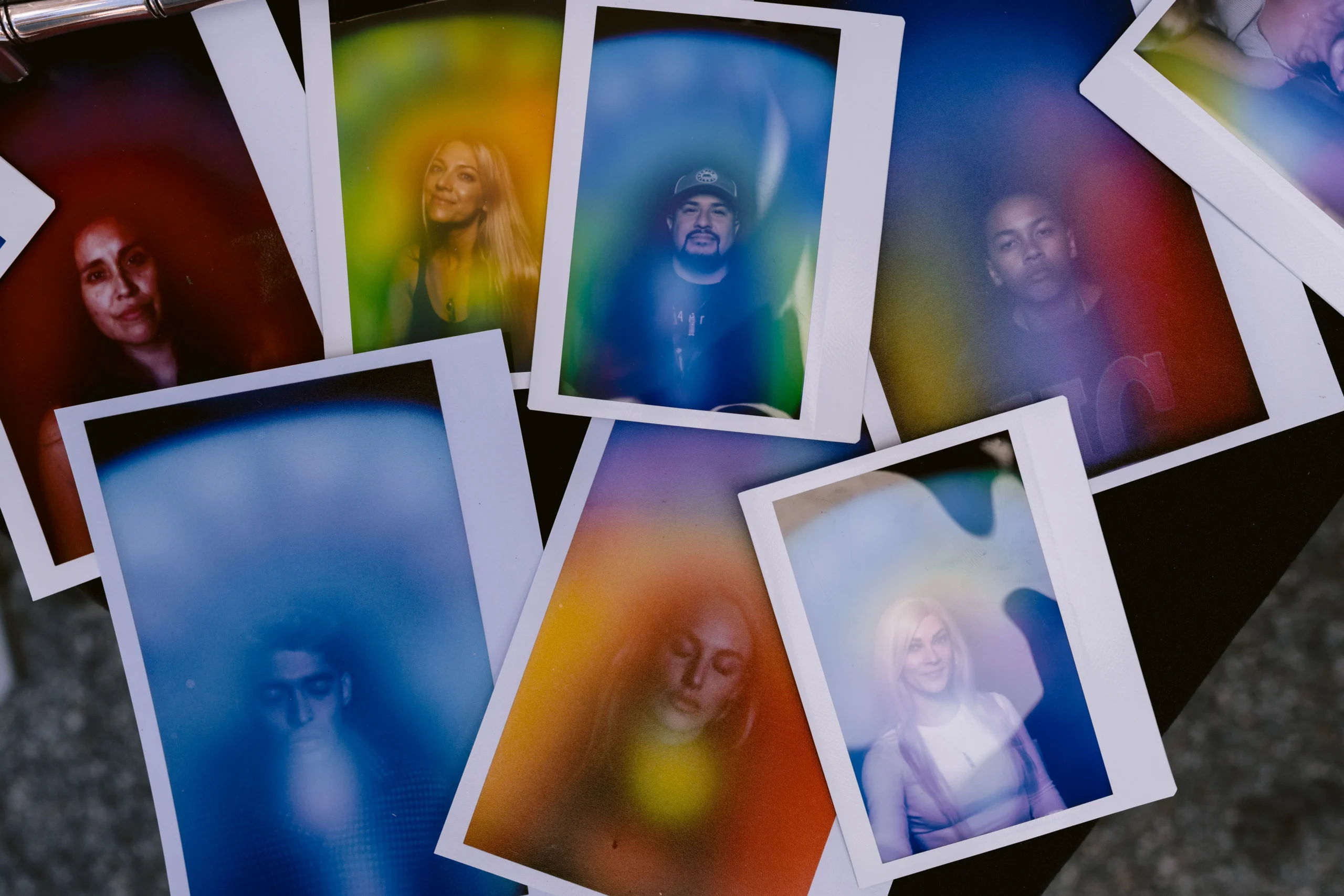
One of my favorite things about aura photography is that your portrait doesn’t actually tell you anything you didn’t already know.
It just might show it to you in a way you’ve never seen before.
That’s an important distinction.
An aura portrait isn’t a personality test, a diagnosis, or a crystal ball. The colors are generated from sensor data and interpreted through the traditions and symbolism associated with aura photography.
So what can you actually learn from it?
A lot—if you’re willing to get curious.
You Might Notice What You’re Already Feeling
Sometimes you’ll look at your portrait and immediately think:
“Yep. That tracks.”
Maybe you’ve been feeling especially creative, social, introspective, energized, or ready for a change.
Seeing those themes represented visually can give you something concrete to reflect on.
That’s one of the reasons I love aura portraits as a self-awareness tool. Instead of simply thinking about how you’re doing, you have an image in front of you that gives you somewhere to start.
The photo doesn’t have to prove anything.
It can simply make you pause long enough to notice what you already know.
You Might Notice What You’ve Been Ignoring
And then there are the portraits that make you go:
“Huh.”
Maybe there’s a color you weren’t expecting.
Maybe something about the image feels completely different from how you think of yourself.
Maybe you’re drawn to one particular area of the portrait and can’t quite explain why.
Those are often the most interesting sessions.
We’re very good at getting used to ourselves. We can become so familiar with our routines, our roles, and the version of ourselves we’ve been presenting to the world that we don’t always stop to ask whether that version still fits.
Sometimes it takes a weird little colorful photograph to interrupt the story.
And that’s not a bad thing.
You Can See That You’re Not Just One Thing
This is one of the biggest takeaways from aura photography.
You’re not one color.
You’re not one personality trait.
You’re not the person you were five years ago—or even necessarily the person you were five minutes ago.
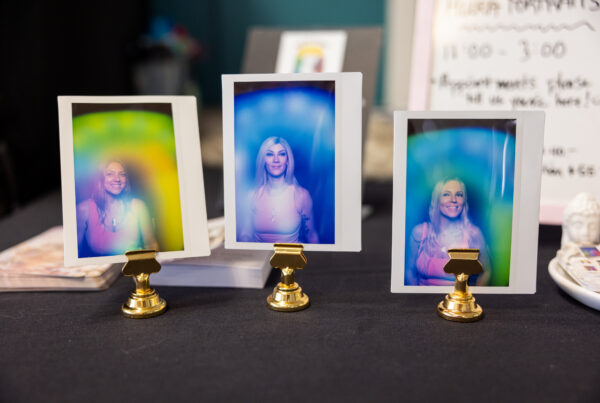
Aura portraits often contain multiple colors and patterns, which is part of what makes every image so unique. Different colors are traditionally associated with different qualities, but their combination and placement are what make the interpretation personal.
You can be confident and uncertain.
Grounded and restless.
Creative and practical.
Outgoing and in need of alone time.
Humans are complicated.
Your portrait can be, too.
You Might See Yourself From Someone Else’s Perspective
There’s something powerful about seeing yourself as an image instead of just experiencing yourself from the inside.
You know what it’s like to be you.
But you don’t always get to see the bigger picture.
A portrait can create a little distance between you and your usual self-narrative.
And suddenly, you’re looking at yourself as an observer.
That’s one reason photography can become a useful tool for self-reflection. Research into portraiture and self-perception has explored how photographs can act as anchors for identity, memory, and the way we understand ourselves.
Aura photography adds another layer because you’re not just looking at your face.
You’re looking at a visual interpretation of information collected during that moment.
It gives you something new to consider.
You Might Discover That Your “Flaws” Aren’t the Story
We’re all conditioned to look at photographs of ourselves and immediately find something to criticize.
My hair.
My skin.
My face.
My body.
My posture.
Aura photography can completely change that interaction.
Instead of asking, “Do I look good?”
you start asking:
“What do I see?”
That’s a much more interesting question.
And sometimes, for a few minutes, you get to look at yourself without evaluating your appearance at all.
Just observing.
That’s a pretty beautiful shift.
You Might Give Yourself Permission to Change
One of the most interesting things about an aura portrait is that it captures a moment.
Not your permanent state.
Not your destiny.
Not a fixed definition of who you are.
Just you, right now.
That’s why taking aura portraits at different points in your life can be so interesting. You may notice familiar colors showing up again, completely different combinations, or changes in where and how colors appear.
Whether you interpret those changes energetically, symbolically, or simply as a prompt to reflect on what has changed in your life, the comparison can be surprisingly revealing.
Sometimes the portrait reminds you:
Oh. I’ve actually come a long way.
The Best Question Isn’t “What Does My Aura Mean?”
It’s:
“What does this make me think about myself?”
That’s where I think aura photography gets really interesting.
You don’t have to agree with every interpretation.
You don’t have to believe every color description you read online.
You don’t even have to believe in auras in the traditional sense.
You can look at your portrait and ask:
What feels familiar?
What surprises me?
What am I moving toward?
What am I ready to let go of?
What part of myself have I been overlooking?
Those questions are yours.
And no camera can answer them for you.
The Bottom Line
Your aura portrait isn’t a definition of you.
It’s a conversation starter.
A snapshot.
A mirror with a little more color.
And sometimes the most valuable thing a photograph can do isn’t tell you something new.
It’s remind you of something you’ve been too busy to notice.
You already know yourself better than any camera ever could.
The fun part is seeing what happens when you give yourself a moment to look.